
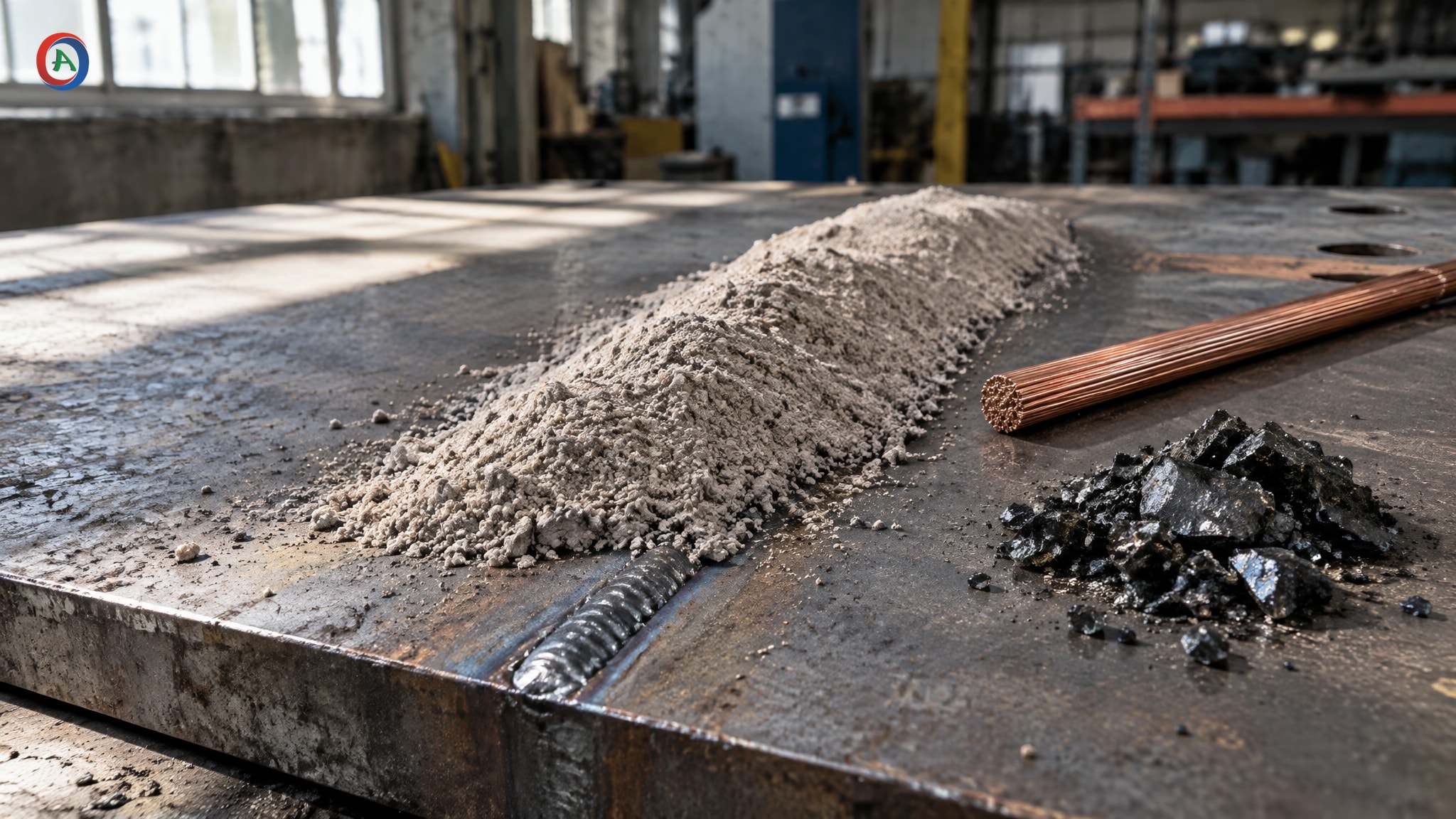
Submerged Arc Welding Flux Powder Supplier: Automelt Range
Submerged arc welding (SAW) is built for long seams, thick plate and repeatable quality. The flux decides much of that result, yet it is often bought as an afterthought. Agrim Projects Services, a Kuwait-based industrial supplier, lists the Ador Automelt flux and wire range for fabricators in oil and gas, construction, power and infrastructure. This guide explains how to choose from it.
What Submerged Arc Welding Flux Does
In submerged arc welding, the arc burns beneath a blanket of granular flux. Nothing is visible while the weld runs, so the flux has to do several jobs at once.
First, it shields the arc and the molten pool from the atmosphere. Oxygen and nitrogen never reach the metal, which protects the weld from porosity and brittleness.
Second, it conditions the weld metal. SAW flux powder deoxidizes the pool and, depending on the formulation, adds alloying elements that bring the deposit to the required chemistry.
Third, it melts into a slag. The slag shapes the bead, controls how it wets the plate edges, and covers the weld while it cools.
Because the flux affects shielding, chemistry and bead profile together, you cannot treat it as a generic filler. Flux does not work alone, either: the wire and the flux are qualified as a pair.
Submerged Arc Flux Selection for Structural and Pressure-Vessel Work
Submerged arc flux selection starts with the job, not the catalogue. Three questions frame it: what is the base metal, what must the finished weld achieve, and what has already been qualified?
Structural Steel Fabrication
For structural steel, work from the drawing. The base metal grade sets the starting point, and the specified tensile and toughness values narrow the field. The inspection criteria matter just as much, because a joint that must pass strict radiographic examination demands a cleaner, more controlled deposit than one that needs only visual checks.
Long, repetitive seams on beams, columns and plate girders reward a flux and wire combination that runs consistently at the current your equipment delivers. If your shop welds at high current on automated heads, say so when you ask for a recommendation, because it changes which wire makes sense.
Pressure-Vessel Work and Code Qualification
Pressure-vessel work adds a formal layer. The governing code and the welding procedure specification (WPS) decide what you may use, and the flux and wire are qualified together as one combination, so changing either one can mean requalifying the procedure.
The practical rule is simple. Choose the combination that your WPS and procedure qualification record already support, or plan qualification welds before production starts.
Price matters on every project, but it cannot be the deciding factor. A cheaper flux that fails qualification, or that the project owner will not accept, costs far more in rework and lost schedule than it saves on the purchase order.
This guidance does not replace your code or your engineer’s judgment. It tells you what to check; the procedure qualification confirms the answer.
Automelt Flux Powder for Critical Infrastructure Fabrication
Ador Welding Limited in India manufactures the Automelt range, and Agrim Projects supplies it to fabricators who need documented, approved consumables on demanding work.
Ador Automelt B20 Plus Flux Powder
Automelt B20 Plus Flux Powder is the Automelt flux grade the store lists. It is an agglomerated SAW flux from Ador Welding Limited, India, and the Agrim Projects listing describes it as KOC and KNPC approved.
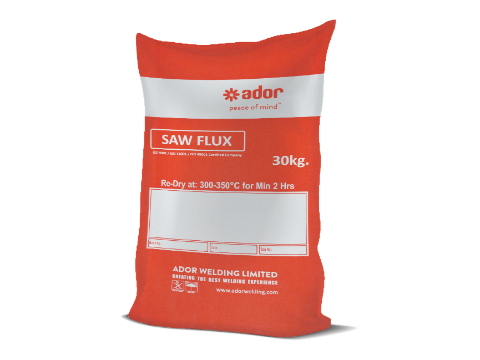
That approval status is relevant if you fabricate for Kuwait’s oil and gas operators, where owner requirements often shape consumable choice before technical preference does. It is a point to confirm against your own project specification, not a substitute for it.
For pricing, use the quote request rather than relying on a figure from a web page. Quantities, packaging and project timing all affect what you pay, and the quotation reflects them.
Whether B20 Plus suits a given joint is a question for procedure qualification. The listing tells you what the product is and where it is approved. It does not guarantee that the flux will meet your specific mechanical or inspection requirements with your chosen wire, and no supplier can promise that in advance.
Wire and Flux Pairing for Automelt SAW Consumables
The flux is only half of the consumable pair. Agrim Projects lists three Automelt solid wires, each aimed at a different duty.
Matching Automelt EM12K, EH14 and EH12K to the Load
The Automelt EM12K wire is listed for heavy-duty automated and semi-automated work. It is developed to operate under the high-current demands of submerged arc welding, so it suits production lines where deposition rate and consistency drive the schedule.
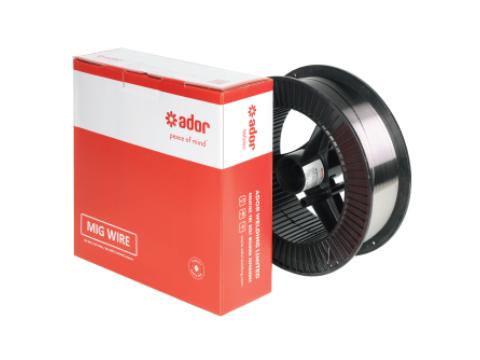
The EH14 high-tensile wire is listed for extreme structural loading in heavy industrial fabrication. Consider it when the drawing calls for higher tensile performance and the joint will carry serious load.
The EH12K for heavy structural work is a high-manganese, silicon-killed wire. The listing describes it as engineered for heavy loading and strict radiographic inspection criteria, which makes it a candidate where weld quality is checked by X-ray or gamma examination.
Read these as starting points based on stated duty. They do not tell you which wire pairs with which flux, and that answer belongs to the manufacturer’s data and your procedure.
Confirming the Flux and Wire Combination Before Production
Treat pairing as a procedure step, not an assumption. Check the flux and wire combination against the manufacturer’s recommendation, then prove it with qualification welds under your WPS.
We name a specific wire partner for Automelt B20 Plus only where manufacturer data supports it. If you need that pairing confirmed for your project, ask for the Ador technical data at the enquiry stage and let the qualification test settle the rest.
Run the test with the plate grade, joint design and heat input you will use in production. A combination that passes on a convenient test plate can still fail on the real joint.
Storing and Drying SAW Flux Before Use
SAW fluxes absorb ambient moisture quickly. Kuwait’s humid coastal conditions in summer make this a real concern, and the effect carries into the weld as porosity and hydrogen-related defects.
On an automated long seam, moisture-laden or contaminated flux tends to produce defects along the whole run rather than at one isolated spot. That is why flux condition belongs in the welding procedure, not in the welder’s memory.
The routine is straightforward:
- Bake SAW flux powder to the manufacturer’s schedule before use.
- Keep it sealed afterwards, and return opened bags to storage promptly.
- Keep reclaimed flux dry, and screen it to remove fines and contamination before it goes back into the hopper.
Follow the schedule printed on the flux packaging, since temperature and time differ between grades. If a bag has sat open on the shop floor, rebake it or discard it.
Electrode and Flux Drying Ovens for SAW Flux
Baking needs equipment that holds a steady temperature. The Ador flux drying ovens listed by Agrim Projects are intended for both shielded metal arc electrodes and SAW fluxes. The listing notes that both absorb ambient moisture rapidly, and that using them without proper baking traps that moisture in the weld.
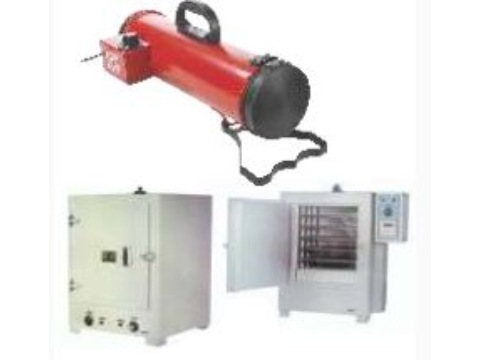
A drying oven will not rescue flux that is contaminated with oil, dirt or mill scale. It removes moisture only.
Welding Consumables Supply and Technical Support in Kuwait
Agrim Projects serves the oil and gas, construction, defense, power, mining and infrastructure sectors. It represents international manufacturers, and it prepares a customized execution plan and health and safety policy for each project. For SAW work, that background means consumable supply sits inside a wider project framework, not as a standalone parcel.
Supplying Ador Automelt Flux and Wire in Kuwait
Looking for a submerged arc welding flux powder supplier in Kuwait means looking for more than stock. You need the flux, the wire, the drying equipment and someone who understands how they fit together. Agrim Projects lists Automelt B20 Plus Flux Powder, the EM12K, EH14 and EH12K wires, and flux drying ovens as one supply set for welding consumables in Kuwait.
To get an accurate response, request a flux and wire quotation and include:
- Base metal grade and thickness range
- Wire diameter
- Flux grade you intend to use
- WPS or procedure reference
- Quantity required
The more of these you supply, the faster the team can review your application and answer with a firm offer instead of a list of questions.
Technical Support from Selection to Procedure
Support follows the order of the work. It begins with an application review of your base metal, joint and inspection requirements. From there, the team shortlists flux and wire combinations from the Automelt listings, then helps you plan the qualification route.
Once a combination is chosen, guidance extends to drying and storage so the consumable reaches the arc in the condition the procedure assumes. Each project follows its own execution plan and health and safety policy.
Common Flux Selection Mistakes to Avoid
Most flux problems trace back to a handful of decisions made early, often under schedule pressure.
Choosing on price alone. A lower unit cost means little if the flux is not approved for the project or fails its qualification tests.
Reusing damp or contaminated flux. Moisture, fines and dirt travel straight into the weld. On a long seam, the defect repeats along its length.
Qualifying flux and wire separately. The two are one consumable combination. Test them together under the WPS.
Overlooking code or owner approval. Check the governing code and the owner’s approved consumable requirements before you place the order, not after the material arrives.
If you are planning SAW work for structural or pressure-vessel fabrication, send your project details through the Contact Us page. Include base metal, wire diameter, flux grade and procedure reference, and the Agrim Projects team will respond with a shortlist and a quotation.
Frequently asked questions
Is Automelt B20 Plus Flux Powder approved for Kuwait oil and gas work?
The Agrim Projects listing describes Automelt B20 Plus as KOC and KNPC approved. It is an agglomerated SAW flux made by Ador Welding Limited in India. Always confirm the approval against your own project specification and owner requirements before ordering.
Can I use any Automelt wire with Automelt B20 Plus?
Not by assumption. Each wire is listed for a different duty, and the pairing must be confirmed against the manufacturer’s recommendation and proven through qualification welds under your WPS. Flux and wire are qualified as one combination.
Why does SAW flux need baking before use?
SAW fluxes absorb moisture from the surrounding air quickly. Moisture left in the flux can cause defects in the weld, so the flux is baked to the manufacturer’s schedule and kept sealed afterwards. Agrim Projects lists Electrode and Flux Drying Ovens for this step.
What should I include when requesting a flux and wire quotation?
Send the base metal, wire diameter, flux grade, procedure reference and quantity through the Contact Us page. These details let the team review your application and shortlist a suitable flux and wire combination. Pricing is provided in the quotation.