
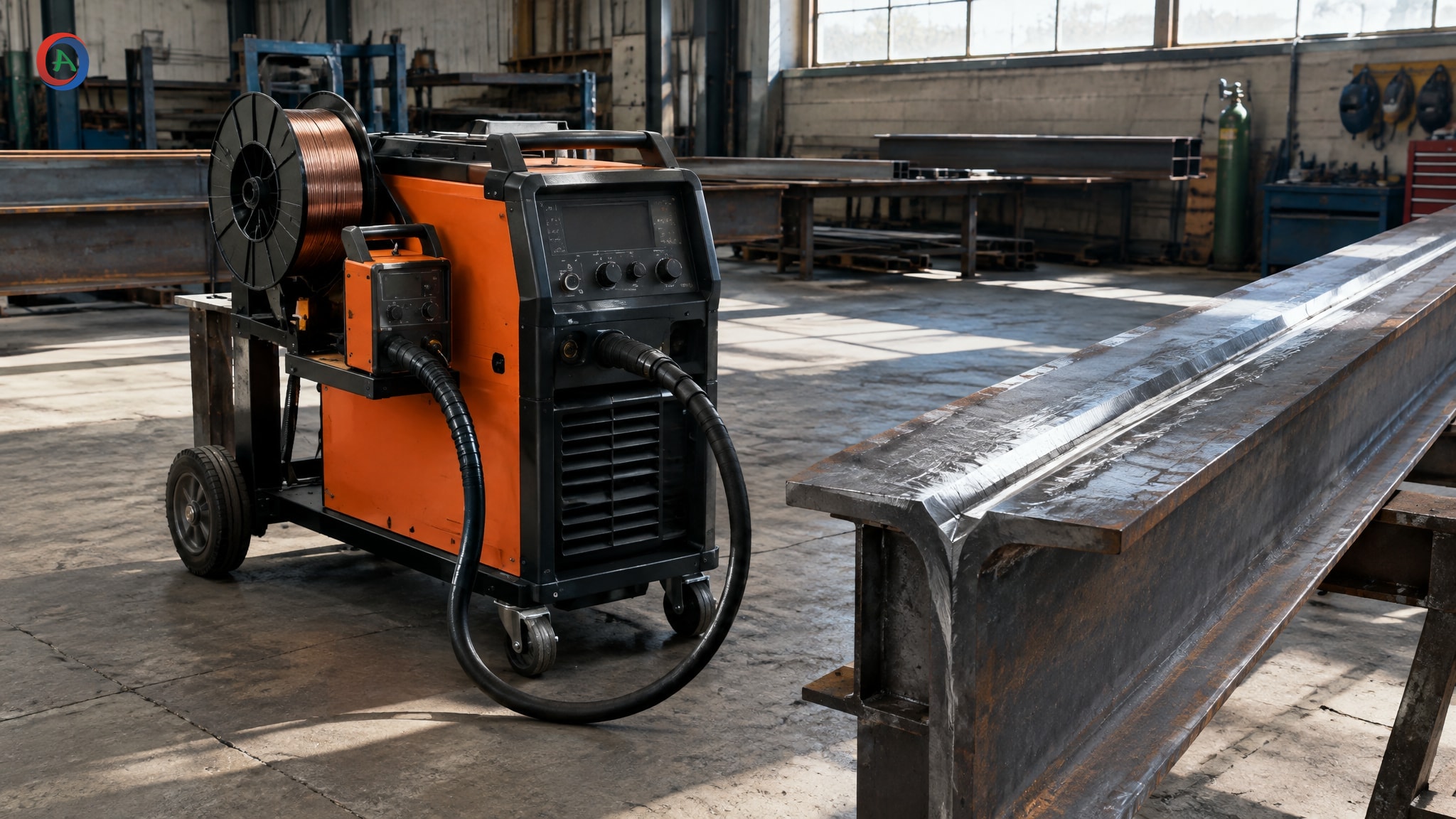
MIG Welding Machine for Heavy Fabrication: Selection Guide
Heavy fabrication punishes the wrong machine. A welder that copes with a morning of tack work can fail by mid-afternoon on a long structural seam, and the cost shows up as rework, idle crews and missed handover dates.
Agrim supplies welding machines, electrodes and filler wires from international manufacturers and runs its own steel fabrication and rental services. The buying criteria below come from the supply and fabrication side of heavy work, with Ador AUTOMIG wires and Ador machines as worked examples.
What Heavy Fabrication Asks of a MIG Welding Machine
Heavy fabrication means long weld runs in thick sections, repeated across full shifts. Arc-on time is high, joint preparation is demanding, and the machine has to deliver the same arc quality in hour seven as in hour one.
That is the frame for choosing a MIG welding machine for heavy fabrication. A catalogue grid lists amperage figures side by side. A fabrication shop needs to know which unit holds its output under load, feeds wire without hesitation and suits the power available at the bay or on site.
Five criteria decide it:
- Duty cycle at the working current
- Amperage matched to plate thickness and wire diameter
- Wire process: solid wire with gas or gas-shielded flux-cored
- Wire feeder and portability
- Power supply at the workplace
The process boundary matters too. If your work is stick-only, a MIG machine is the wrong purchase, and the Thoroughbred Series Ac Arc Welding Transformers are the better starting point. Everything that follows assumes continuous wire-fed welding.
Duty Cycle and Amperage: Sizing the Machine to Sustained Load
Two numbers on a rating plate decide whether a machine survives heavy work: the current it can deliver and how long it can deliver it. Most buyers read the first and skip the second.
Duty Cycle on a Heavy Fabrication Welding Machine
Duty cycle is the share of a set time window that a machine can weld at a stated current before it must cool. A higher current lowers that share, so the same machine that welds almost continuously at moderate output may need long rests at its maximum.
A duty cycle welding machine rating therefore means nothing without the current attached to it. Ask for the figure at the amperage your procedure actually uses, not at a lower current that flatters the number. The duty cycle principle is the same across all electrical equipment: heat builds faster than it clears when the load stays high.
On the shop floor, a machine that trips its thermal protection repeatedly is often undersized for the job. Moving the welder into shade will not fix a rating problem.
Matching Amperage to Plate Thickness and Wire Diameter
Start from the thickest plate and the largest wire diameter in your welding procedure. Those two inputs set the current you need to run, and the duty cycle at that current is the figure that counts.
The best MIG welder for thick steel is therefore the one whose duty cycle holds at the amperage that plate thickness and wire diameter demand. It is not the one with the highest headline amperage. A machine advertised at a large maximum can still deliver a short duty cycle at the current your joint needs.
For sustained runs, the benchmark is how a machine behaves under thermal stress. The Champ 600 for sustained structural load is described for heavy industrial manufacturing, commercial shipyards and marine repair docks, with a constant-current design stated to hold amperage under intense thermal load. That emphasis is what you should look for in any machine you shortlist.
Solid Wire or Flux-Cored: Choosing the Wire Process for Heavy Work
Both AUTOMIG items in this guide are wire consumables, not machines. They show the wire side of the decision, which sits alongside the machine choice and changes the setup, the running cost and the clean-up.
Flux-cored welding runs on the same wire-feed, MIG-type equipment. Wire type, drive rolls and shielding gas decide the setup, and starting settings come from the wire data sheet and a test weld on representative material. A flux cored welding machine, in practice, is a wire-feed unit set up for the right wire.
Solid Wire with Shielding Gas: Ador AUTOMIG 70S-6
AUTOMIG 70S-6 solid wire is a copper-coated carbon steel wire classified to AWS A5.18 ER70S-6 and EN ISO 14341-A-G 42 4 M21 3Si1. The classification carries an M21 shielding designation, so you can check the wire against the procedure and the base metal before it reaches the bay.
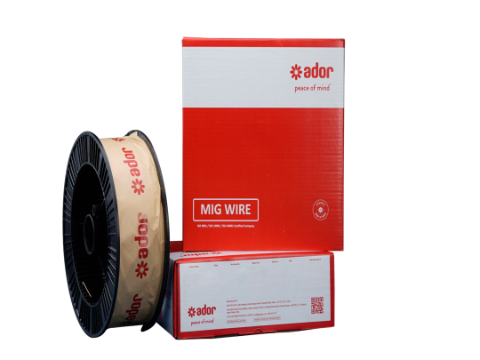
Solid wire with shielding gas suits controlled shop floors. Indoors, away from drafts, the gas shield stays stable and the weld surface stays clean, with little slag to remove between passes.
One limit applies. The carbon steel AUTOMIG wires in this guide cover carbon steel work only. Stainless steel needs filler metal and shielding gas matched to the alloy, so do not run these wires on stainless.
Flux-Cored Wire on a MIG Welding Machine: AUTOMIG FC 71T-1
All-position AUTOMIG FC 71T-1 is a gas-shielded flux-cored wire described for heavy fabrication. It is not a gasless wire, so shielding gas still belongs in the running-cost comparison against solid wire.
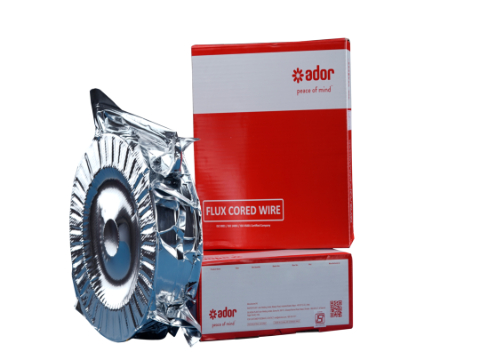
It suits outdoor and thick-section work. Where air movement makes a solid-wire gas shield harder to hold, the flux core gives the weld more protection, and the all-position capability helps on structural joints that cannot be rotated into the flat.
The trade-off is housekeeping. Flux-cored welds leave slag that crews must remove, and the process produces more fume, so extraction and ventilation need planning before the first shift.
Wire Feeder and Portability: Fitting the Machine to the Workplace
The feeder is where wire quality turns into arc stability. If the drive rolls do not match the wire, feeding becomes erratic whatever the power source can do.
Match the drive-roll profile to the wire type: solid wire and flux-cored wire grip differently, so check the roll type against the wire you buy. Confirm the feeder mounts where the welder works, whether that is on the machine, on a boom or on a separate carrier. For any wire-feed unit, also check that the output is constant voltage, since MIG-type wire feeding depends on it.
Portability follows the workplace. A bay unit stays put and needs a stable supply. A trailer-mounted unit needs transport planning and towing access. A generator-fed site unit needs power that matches the welding load. Each case carries different power and transport needs, so settle where the machine will actually work before you compare models.
Powering a MIG Welder on Remote or Generator-Fed Sites
On off-grid desert sites, and wherever grid interruptions are routine, site power is usually the tightest constraint. A welder that performs well in the workshop can stall on a generator that was sized for lighting and small tools.
Generator capacity has to cover the welding load, not just the nameplate of the welder. Three-phase designs such as the Thyroluxe 401D/600 need a matching three-phase supply, so confirm the phase and capacity before the unit is mobilised. To work through the arithmetic, see how to size a generator for welding loads.
Industrial MIG Welders and Power Sources for Heavy Fabrication
Each unit below maps to the criteria above by its catalogue title. Read the product page for the processes and ratings it states, because the processes a machine supports are not interchangeable across constant-voltage and constant-current designs.
MIG-Dedicated and Multi-Process Options: Champmig 400 and Champ Multi 400
Champmig 400 for dedicated GMAW is the lead option for an industrial MIG welder. It is described for high-amperage GMAW (MIG/MAG) on continuous structural steel assembly, commercial shipyard production and heavy equipment manufacturing. For a MIG-first fabrication shop, it is the closest match to the brief.
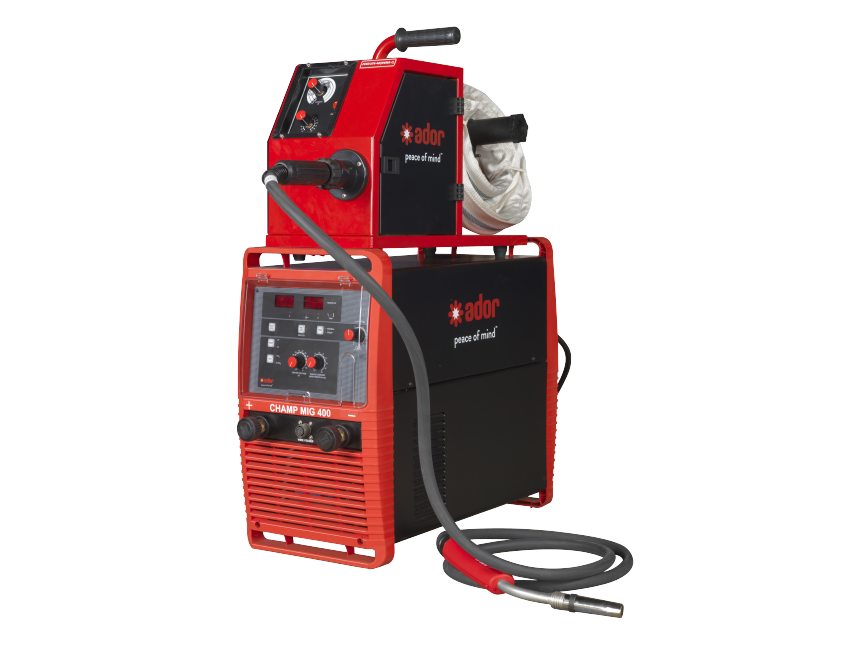
Pair it with solid or flux-cored wire from the section above, and size the feeder and supply to the working current.
Champ Multi 400 for multi-process shops, listed as Champ Multi 400- Multi purpose Welding Machine, is the multi-process unit. Its value is on sites where one machine replaces several single-process machines, cutting the equipment you have to move and keep supplied.
High-Amperage Power Sources: Champ 600, Champ T400 and Thyroluxe 401D/600
The Champ 600 Inverter Welding Machine and the Champ T400 Inverter Welding Machine are constant-current power sources. The Champ 600 is described for heavy industrial manufacturing, shipyards and marine repair docks. The Champ T400 is described for cross-country pipeline strings, storage tank setups and maritime structural fabrication.
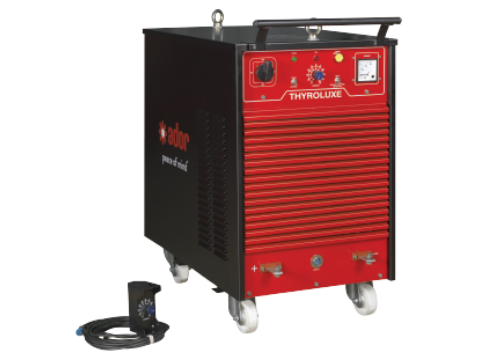
The Thyroluxe 401D/600 high-amperage DC unit is a DC power source rated 400 Amp / 600 Amp in its title. It uses a three-phase thyristor bridge design and is aimed at heavy fabrication and cross-country infrastructure maintenance.
Constant-current designs are usually chosen for stick and TIG work, so confirm the processes each product page states before you specify one for wire-fed welding. These units suit buyers whose priority is sustained high-amperage output. They do not replace a dedicated wire-feed MIG unit for continuous GMAW production.
Rent or Buy for Heavy Fabrication Projects
Arc-on hours and the project window settle this question. Count the hours a machine will actually spend welding, not the hours it sits on site.
Buying suits recurring shop output. If the same machine runs every week across years of structural work, ownership spreads the cost over a long working life. Renting suits a defined package or a peak, where the machine is needed for months and then not at all.
The break-even turns on four things: arc-on hours, consumables, transport and how long you will need the machine. A rental that arrives on site, ready to run, avoids both the capital outlay and the idle asset afterwards.
Agrim offers short- and long-term heavy equipment and generator rentals, so a project window can cover both the welding machines and the power behind them.
Choosing a Welding Machine Supplier in Kuwait
A welding machine supplier in Kuwait should answer technical questions in writing before the order, not after delivery. Use this checklist when you compare vendors:
- Written duty-cycle data at your working amperage
- Wire classification data, such as AWS and EN designations, for every consumable
- A steady supply of consumables for the length of the project
- A project health and safety plan, not a generic policy
- Service coverage across Kuwait, including Ahmadi, Shuwaiba and Al Zour
Agrim builds a customised execution plan and health and safety policy for each project. Welding machines, electrodes, filler wires and accessories come from one source, with fabrication and rental support behind them.
Send your plate thickness range, wire type, daily arc-on hours and site power details, and Agrim will match the machine and consumables to the job. Request a machine and consumables quote through the Contact Us page. Powering Projects, Driving Progress.
Frequently asked questions
What welder is best for thick steel?
Choose the machine whose duty cycle holds at the current your plate thickness and wire diameter require. A high headline amperage means little if the duty cycle collapses at the working current. For long structural runs, check written duty-cycle data before you buy.
What should my MIG welder be set at for steel?
Starting settings come from the wire manufacturer’s data sheet for the wire diameter and shielding gas you use. Confirm them with a test weld on material matching the job, then adjust to your procedure. Plate thickness, joint type and position all shift the final figures.
Can you weld stainless with a MIG machine?
Yes, but only with filler metal and shielding gas matched to the stainless alloy. The AUTOMIG 70S-6 and AUTOMIG FC 71T-1 wires in this guide are for carbon steel, so do not use them on stainless.
Does flux-cored wire need a different machine from solid wire?
No. Flux-cored welding runs on the same wire-feed, MIG-type equipment. What changes is the setup: the wire type, the drive rolls and the shielding gas. AUTOMIG FC 71T-1 is a gas-shielded wire, so it still needs a gas supply.