
How to Size a Diesel Generator for a Construction Site
Temporary site power rarely behaves like a permanent building supply. Loads change with every phase, motors start under heavy demand, and the Gulf climate takes output away from the set. This guide sets out how to size a diesel generator for a construction site in five steps, and maps the result to the ratings Agrim Projects supplies.
Sizing a diesel generator for a construction site starts with the load
Many search results total the watts on a list and stop there. That method ignores power factor, motor starting surges and heat, so it often returns a figure that looks adequate on paper and trips on site. A kVA-based method works from the site’s own load list, tests it phase by phase, and then corrects for rating basis and ambient conditions.
Named shortcuts such as the 80% rule and the 20/20/20 rule circulate widely. They are starting points for a conversation, not engineering inputs. Your load list overrules them, because it reflects the actual motors, welders and cabins on your site rather than an average site.
A generator sizing calculator does not change this. It repeats the same steps, so the inputs you enter decide the answer. A technical guide from Welland Power frames selection the same way: a set of considerations, not one rule of thumb.
This method does not replace engineer sign-off. It produces a defensible requirement, and the project’s electrical engineer still confirms the phasing assumptions behind it.
Step 1: Run the generator load calculation from the site load list
Start with a complete list. A missing welder or hoist is the most common reason a site set runs out of margin in the middle of a shift.
List every load from its nameplate and duty cycle
Cover each tool, site cabin, pump, hoist, welder and lighting circuit. For each one, record the nameplate kW or kVA, the power factor and the duty: continuous, intermittent or occasional.
Then repeat the exercise for each project phase. Earthworks, structural steel and fit-out use different equipment, so the peak often comes from a phase that is not the busiest one overall.
Total the running demand per phase. Loads rated in kW convert to kVA by dividing by their power factor, which Step 2 covers in detail.
Apply a diversity factor to reach the simultaneous running load
Connected load is not running load, because not every item operates at the same moment. Two terms describe the correction. A demand factor is the multiplier, below one, applied to connected load. Diversity factor is a related ratio above one, and site practice often uses the two loosely for the same idea.
Whichever term the team uses, the value has to come from the phasing plan and engineer sign-off. A fixed table cannot know whether the pumps and the batching plant ever run together on your project.
Multiply each group of loads by its agreed factor and sum the results. That figure is the simultaneous running load for the phase.
Step 2: Convert the site load to kVA and add motor starting demand
Generators are rated in kVA, while most equipment is rated in kW. Divide each load’s running kW by its power factor to get running kVA, then total the groups. A typical case: a phase whose other loads total 420 kVA running, with the largest motor starting at 450 kVA, gives a requirement of 870 kVA.
Why the largest motor’s starting kVA often sets the minimum size
A motor draws a multiple of its running current for a moment at start. The generator must carry that surge on top of everything already running, so the starting event can set the minimum size even when the total running load is modest.
The calculation is direct. Take the running kVA of all other loads, then add the largest motor’s starting kVA. Its own running demand is already inside the starting figure, so it is counted once.
Check each large motor in turn. The worst case is the start that adds the most demand, which is not always the biggest motor, because a smaller motor on a harsher starter can draw more.
Take starting figures from motor or starter data, never from running current. Start-up speed is a separate matter: a published article on emergency standby diesel generators states that a diesel generator can start from cold and accept 100% block loading within 10 to 15 seconds. That describes how fast the set responds, not how large a starting surge it can absorb.
How soft starters and variable-speed drives change the starting figure
Soft starters and variable-speed drives reduce starting demand, which can lower the generator size the largest motor requires. They do so only as far as the supplier’s data for that specific starter confirms.
Use the supplier’s figure for the starter fitted, not a general assumption about the technology. If the data is not yet available, size on the direct-on-line figure and revise later.
Step 3: Prime vs standby rating for continuous site power
Every generator carries more than one rating, and the numbers are not interchangeable. A prime rating allows unlimited running hours with variable load. A standby rating covers emergency use with limited running hours, and for the same set the standby figure is normally higher than the prime figure.
A set that looks large enough against its standby number may fall short on the basis your site actually needs.
Why continuous site power points to the prime rating
Construction sites usually run long shifts, and many run around the clock. The generator is the primary source, not a backup, so compare the requirement from Step 2 with the prime rating.
Before any derating, confirm the rating basis on the datasheet. A manufacturer’s spec sheet shows standby and prime ratings with their stated conditions, and those conditions should be read before any kVA figures are compared.
Step 4: Apply generator derating for high temperature and altitude
Usable output falls as ambient temperature and altitude rise. Thinner, hotter air carries less oxygen into the engine and removes less heat from it, so the set delivers less than its nameplate figure.
How Gulf summer heat and dust reduce usable output
Summer heat across Kuwait and the wider Gulf pushes the cooling system hard, and airborne dust loads the air intake and radiator. Both effects reduce what the set can deliver continuously, and both are strongest in the months when site demand for cooling and pumping is highest.
Derating for high temperature is therefore a design step in this region, not an afterthought. A requirement that clears the nameplate rating can still fail at design ambient.
Reading the manufacturer’s derating data for the design conditions
Take the design ambient temperature and the site altitude from the project brief or site records. Then apply the manufacturer’s derating curve for the chosen set to its prime rating, and compare the result with the requirement.
Use only the curve published for that set. A generic percentage from another source does not describe this engine, this radiator or this air filtration.
In the worked case, an 870 kVA requirement passes only if the set’s derated prime output at design ambient still reaches 870 kVA.
Step 5: Round up to the next standard kVA size with a planning margin
Generators come in fixed ratings, so the result never lands exactly on a listed size. Choose the smallest listed rating whose derated prime output still meets the requirement.
Add margin only for future loads the engineer has confirmed, such as a second phase already in the programme. Speculative margin raises cost and creates the problem described next.
Why an oversized set carries its own risk
A diesel engine running lightly loaded suffers wet stacking: unburnt fuel and oil deposits build up in the exhaust and cylinders. Over time this reduces reliability and raises maintenance demand.
The same standby-generator article recommends running the engine at 70–100% of its rated capacity on an artificial load bank for 2 to 4 hours during annual testing to prevent wet stacking. Treat that as a test regime, not a sizing margin. It does not justify choosing a larger set.
Where the requirement exceeds any single set, paralleling two or more units is an option. The engineer must confirm it, including the control and protection arrangements.
Match the kVA result to the Agrim Projects diesel generator range
Agrim Projects lists the Diesel Generator 75 kVA / 60 KW for smaller loads. Above it, the Energon sets run from 750 kVA to 3000 kVA and are described as manufactured under strict European and ISO standards.
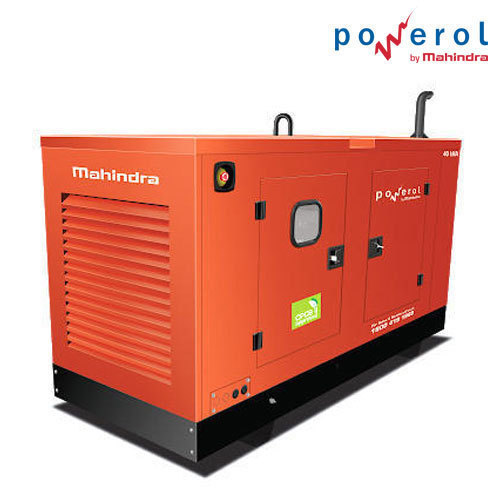
Match the rounded result, after derating, to the nearest rating that clears it:
- Smaller site loads: Diesel Generator 75 kVA / 60 KW, linked above.
- Mid-size loads: Diesel Generator 750 kVA and Diesel Generator 1000 kVA.
- Larger loads: Diesel Generator 1250 kVA, Diesel Generator 1500 kVA and Diesel Generator 2000 kVA.
- Large-site requirements: Diesel Generator 2500 kVA and Diesel Generator 3000 kVA, the largest listed rating.
Confirm the rating basis and derating data for the chosen set on its product page and datasheet before ordering. For a side-by-side view of every rating, see the Kuwait diesel generator supplier range.
Budgeting follows the size decision. A reader whose result lands at 1000 kVA can review the cost factors for a 1000 kVA set in Kuwait before requesting a quote.
With a completed load list, contact the Agrim Projects team through the Contact Us page. Agrim Projects prepares a project-specific execution plan and health and safety policy for each project, so the generator selection fits the schedule and site safety requirements from the start.
Frequently asked questions
What size generator is appropriate for a construction site?
The size comes from the site’s load list, not from a fixed figure. Total the running kVA with a diversity factor, add the largest motor’s starting kVA, compare with the prime rating after derating for site heat and altitude, then pick the smallest listed rating that clears it. Agrim Projects lists sets from 75 kVA / 60 KW to 3000 kVA.
What is the 80% rule for generators?
It is a common shortcut that keeps a set from running at its full rating. It is a rule of thumb, not an engineering input. A site load list, with motor starting demand and derating applied, gives a more dependable answer for a construction site.
What is the 20/20/20 rule for generators?
It is another rule of thumb that appears in generator sizing searches. Like the 80% rule, it does not account for your motors, phasing or Gulf heat. Use it, at most, as a rough cross-check after the load calculation.
How do I calculate the size of a diesel generator I need?
List every load with its nameplate kW, power factor and duty, apply a diversity factor agreed with the engineer, and convert to kVA. Add the largest motor’s starting kVA to the running kVA of the other loads. Check the result against the set’s derated prime rating at design ambient temperature and altitude.
Is a bigger generator always safer for a construction site?
No. A set that runs lightly loaded for long periods is prone to wet stacking, where unburnt fuel and oil deposits build up. Choose the smallest rating whose derated prime output meets the requirement, and add margin only for future loads the engineer has confirmed.