
Diesel Generator Rental in Kuwait for Project Sites
Temporary power sets the pace on a project site. Cranes, welding sets, site offices and testing rigs all wait on it, and a late or undersized supply delays every trade behind it.
Agrim Projects supplies and rents power generators from Kuwait. Powering Projects, Driving Progress is the working principle: capacity arrives when the programme needs it, sized to the load, and under safety terms written for the site.
Diesel Generator Rental in Kuwait as a Schedule and Cost Solution
Buying a generator makes sense when a unit will run for years in the same role. Most project power does not work that way. A site needs capacity for a defined window, such as a shutdown, a construction phase or a commissioning period, and then the need ends.
Rental matches the cost to that window. Capital stays free for the work that earns a return, and the unit is not left idle, stored or resold once the project closes. Hire also moves the schedule forward, because a unit selected against the site load can be mobilised to meet the programme date instead of waiting on a purchase cycle.
Procurement managers who want to compare hire with purchase can review the generator supply range from 5 to 3000 kVA alongside the rental options. Agrim Projects builds each project around a customized execution plan and a health and safety policy, so site requirements are handled per project rather than as a generic clause.
Rental is not the right answer for every case. If your unit will run continuously on one site for the long term, a purchase may cost less over its life, and the quotation process is the place to test that.
Short-Term vs Long-Term Generator Rental
Term length changes the commercial case more than any other variable. A quotation builds cost from three inputs: the term, the unit size and the scope of service. Hire-or-buy is therefore judged project by project, and the unit size is re-checked whenever the site moves into a new phase.
Short-Term Generator on Hire for Outages and Peak Loads
A generator on hire for a short term suits work with a clear start and finish. Typical cases are a planned outage on a plant, a commissioning window when permanent supply is not yet energised, and a peak-load period when existing capacity falls short.
In these cases the value is speed and fit. You need the right unit on site for the dates in question, and then you need it gone. Short-term hire avoids paying for capacity in the weeks nobody uses it.
Standby Generator Rental for Long-Term Backup Duty
Standby generator rental covers a different need: protection against a loss of supply over an extended period. A camp, a data-sensitive office or a critical process area may run on grid or main power and only call on the unit when that supply fails.
Long-term hire also suits multi-phase construction, where the load grows from temporary offices and lighting to batching plants and heavy machinery over many months. A unit that is correct for phase one may be too small for phase three, so the sizing is reviewed at each phase change rather than fixed on day one.
Sizing Temporary Site Power for Kuwait Project Sites
A generator is sized to what the site draws, not to what the equipment labels add up to. Nameplate totals overstate steady running demand and understate starting demand, so a unit chosen from them is often wrong in both directions.
The sizing check starts with a connected load schedule and ends with a kVA class. This guide does not replace a load study by a qualified electrical engineer on a complex installation. It gives you the logic the quotation follows.
Calculating Connected Load and Motor Starting Demand
List every load on the site: lighting, offices, welfare, welding sets, pumps, compressors, cranes and workshop tools. Then correct that list for how the site actually runs.
- Load diversity. Not every load runs at once. Apply a realistic diversity factor to the schedule instead of adding every item at full rating.
- Motor starting demand. A motor can draw several times its running current for a moment at start-up. A site with a modest office and lighting load plus one large motor needs headroom above steady running demand, so the starting check comes before a unit is named.
- Planned expansion. Add allowance for loads that join the site in later phases, or plan to change the unit at the phase change.
- Summer derating. Kuwait’s summer temperatures reduce the output an engine can deliver. Apply the manufacturer’s derating data for the ambient temperature on site.
- Power factor. State the power factor the equipment must supply. The ratings in the range follow a 0.8 relationship, so a 100 kVA unit delivers 80 kW and a 625 kVA unit delivers 500 kW.
Because kVA and kW are different measures, a load schedule written in kW must be converted before it is matched to a unit.
Matching the kVA Class to Small, Mid-Size and Large Site Loads
Once the design kVA is known, it maps to the range as follows.
- Small loads: site offices, welfare and lighting. The Diesel Power Generator 5 KVA is a compact unit for steady supply to smaller loads.
- Mid-size construction loads. The Diesel Generator 100 kVA / 80 KW is built for construction sites and critical backup. Its silent canopy systems are designed to withstand high ambient temperatures while sustaining peak operating load cycles, which is a relevant point for Kuwait’s summer heat.
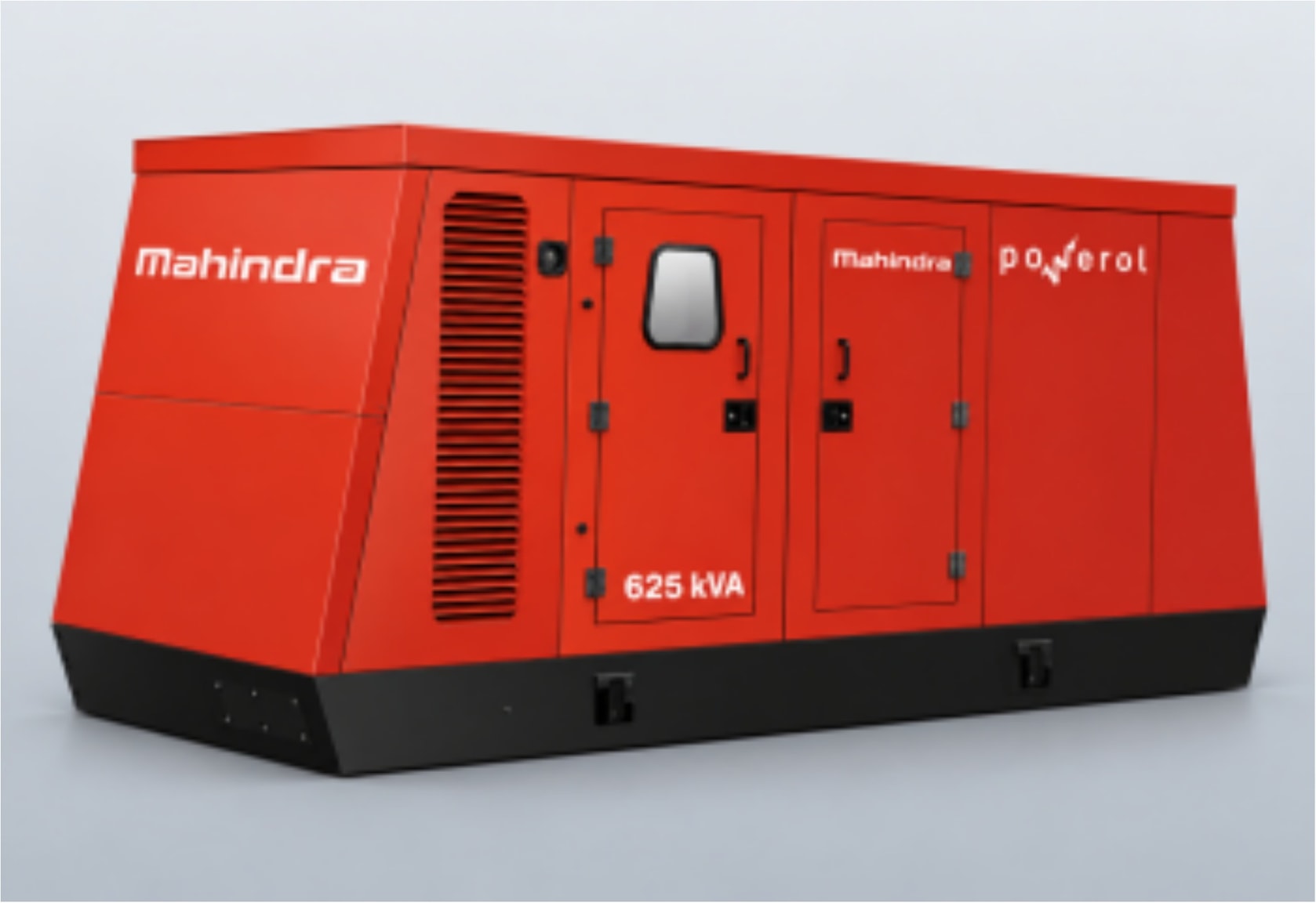
- Larger site loads. The Diesel Generator 625 kVA, 500 KW serves sites whose combined plant and facilities exceed what a mid-size unit carries.
- Large-scale industrial and remote construction sites. The Diesel Generator 1250 kVA, Diesel Generator 2000 kVA, Diesel Generator 2500 kVA and Diesel Generator 3000 kVA cover the top of the range.
The Energon descriptions for the 1250 kVA to 3000 kVA units frame power instability on large industrial and remote sites as an expensive liability, not an inconvenience. That is the reason oversized or undersized units at this scale are a cost problem, not a technical detail. The full power generator range shows every class in one place.
Mobilisation and Fuel Logistics for Temporary Power
A unit that is correctly sized still fails the programme if it arrives late or runs dry. Mobilisation and fuel are planned items, and both are agreed before the hire is confirmed.
Mobilisation Timeline from Order to Energisation
The timeline runs in stages, with dates agreed per project against the site access windows.
- Order and site survey. The load schedule is confirmed, the unit is selected and the site is checked for placement, access and connection points.
- Delivery and lifting. The unit travels to site and is lifted into position, which depends on the unit size and the lifting arrangements available.
- Placement and connection. The generator is set on its base, the fuel arrangement is made and the output is connected to the distribution.
- Commissioning checks. Protection, earthing, controls and load acceptance are checked before the site relies on the supply.
- Handover. The site team receives the unit with the operating and HSE arrangements agreed in the quotation.
Three things set the pace: the size of the unit, the access windows the site allows, and the permits needed before work starts. If your programme has a fixed energisation date, say so in the first enquiry so the stages can be planned backwards from it.
Fuel Supply, Storage and Consumption Planning
Treat diesel as part of the power plan, not as an afterthought. The planning questions are straightforward.
Tank capacity is set against run hours. Divide the usable tank volume by the fuel consumption at the expected load, and the result is how long the unit runs between fills. Refuelling frequency follows from that figure, and a unit on 24-hour duty needs a different routine from one that runs for a single shift.
On site, fuel storage and spill control need to be set up before the first delivery. That means a defined storage location, containment for spills and a clear refuelling procedure. Consumption is logged so that fuel use can be checked against the load and the run hours.
Which party arranges diesel supply and keeps the consumption log is set out in the rental terms in the quotation. Confirm that point before signing, because it decides who is responsible when the tank gets low.
Safety and Maintenance Included in Every Generator Rental
Generators bring fuel, exhaust, noise and live electrical supply onto a site. Agrim Projects treats each of these as a project-specific matter, with the health and safety policy applied to the actual site, not to a typical one.
Project-Specific HSE Plan for Generator Operation
The HSE plan for a hire covers the following:
- isolation and earthing of the generator and its connections
- exhaust and ventilation, especially where a unit runs in or near enclosed areas
- fuel handling and spill response
- exclusion zones around the unit
- noise at the unit and at the site boundary
The plan is aligned to the permit-to-work system in force on site, so generator work follows the same rules as every other task. You should expect your site HSE team to review it before mobilisation.
Maintenance is part of the rental package. A servicing schedule is agreed for each hire and set out in the quotation, so the unit stays reliable for the whole term and the site knows when service visits are due.
Equipment Rental in Kuwait Beyond Generators
Power is rarely the only equipment need on a project. Refinery shutdowns, offshore maintenance and remote civil construction all call for robust, highly reliable machinery alongside the power supply.
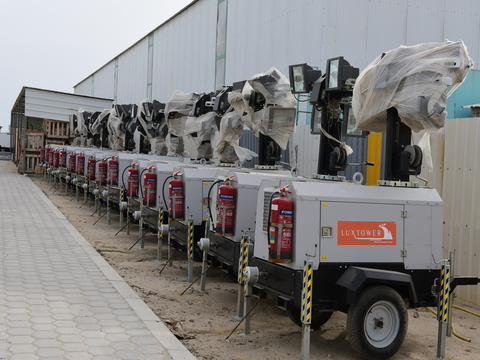
Buying specialised equipment outright can strain capital budgets, and it adds logistics and maintenance obligations that continue after the job ends. Hire avoids both. The Equipment Rental service in Kuwait provides heavy-duty industrial machinery on the same basis as the generators.
For procurement managers, the practical benefit is one schedule. Power and machinery hire can be planned together, with mobilisation dates that line up and one supplier working to one execution plan.
Renting a Generator for a Construction Site: The Request Process
To rent a generator for a construction site, start with a site brief. The brief gives Agrim Projects what it needs to select a unit, and the quotation that follows fixes the unit, the dates and the safety terms before the hire is confirmed.
Information to Include in a Rental Enquiry
A complete enquiry covers these points:
- Connected load. The load schedule, including large motors and their starting method.
- Expected duration. Start date, term and any planned phase changes.
- Site location and access. Where the unit goes, how it reaches the site, and any lifting or access limits.
- Fuel requirements. Run hours expected, storage available and preferences on who arranges diesel.
- HSE requirements. Site rules, permit-to-work arrangements and any client standards that apply.
The quotation returns the unit selection, the mobilisation dates, the fuel responsibilities and the HSE terms. A thin brief leads to a wider range of assumptions, so the more precise your load and access details are, the more precise the quotation is.
Send your site brief through the Contact Us page to request a rental quotation from Agrim Projects.
Frequently asked questions
Is it cheaper to rent a diesel generator or buy one?
Rent when the need has a defined end, such as a shutdown, a construction phase or a commissioning window. Buy when one unit will run in the same role for years. Cost in each quotation is built from term, unit size and scope, so the comparison is made per project.
Which generator size suits a site office and lighting?
The Diesel Power Generator 5 KVA is the unit for smaller loads such as site offices, welfare and lighting. Check the load schedule first, because any motor on the circuit changes the starting demand and may call for a larger unit.
How is the kVA rating worked out for a construction site?
It is built from the connected load schedule, adjusted for diversity, then increased for motor starting demand, planned expansion and derating in Kuwait’s summer heat. The power factor is stated so kW and kVA figures can be matched. A single nameplate total does not give a reliable answer.
Who supplies the diesel during a generator hire?
The rental terms in the quotation state which party arranges diesel supply and logs consumption. Settle this before the hire is confirmed, together with tank capacity, refuelling frequency and on-site storage and spill control.
What does a rental enquiry need to include?
Send the connected load, expected duration, site location and access, and fuel and HSE requirements. With these, Agrim Projects can issue a quotation covering unit selection, mobilisation dates and HSE terms.